I WANNA GET OFF OF MR PETER THIEL’S WILD RIDE!!!
I’m waiting for AI to delete the sum of internet accessible human knowledge.
Who the fuck bothers to post fake images on birding websites?
The whole fucking point of birding is enjoying seeing the birds. Taking photos of birds is difficult and satisfying.
Posting fake bird photos is fucking stupid.
The internet peaked over a decade ago when bandwidth was alright for what we consumed and attention seekers have only infested mainstream media. You could navigate around them. Most forums have died since the early 2010s and you have to deal with these faking clowns even in the tidiest niches that we have left. People have become completely obsessed with attention and money. It‘s all the internet is good for anymore. At least if you ask most users.
Birders can be weird. Some can get very competitive, not surprised some would make fake images to pretend they saw some rare bird in an area they aren’t normally seem or something.
Pathological liars feel the need to lie and decieve unnecessarily and pointlessly at every twist and turn. AI is their new bread and butter. Ask them why they act the way they do, and they probably can’t even tell you.
There’s a weird level of brain rot going on with AI. My wife recently had some troubles trying to research who owned our home in the past (it was built in the 1880s); she posted to a local forum asking for some specific information about who & where they were buried and so on and was getting replies from somebody that were seemingly plausible but just had no basis in reality when she looked into it further. After pressing him several times for his sources the guy finally admitted it was ChatGPT.
Just… why the fuck? Why would anybody do that? They wasted not only my wife’s time but their own as well, they contributed nothing useful (and if anything, their “contribution” was purely negative).
It’s baffling behavior.
At least in that case they could be stupid enough to think ChatGPT magically knows everything (lord knows a lot of people seem to think that) and be genuinely trying to help. I can kind of forgive being incredibly stupid and not realizing it if your intentions are good.
Posting fake bird photos requires making or pretending you made them. Either case is shitty.
It doesn’t. On a lot of phones you can just zoom in and the camera will use AI to fill in what it wants because of some “super zoom” (or similar) feature.
That is in to way comparable.
This isnt a Samsung moon monent lmao
It’s different, but very similar. AI will just fill in what it doesn’t know with something that it does know.
Really it’s kind of worse than the moon photos. At least that is what the moon would actually look like.
The mental illness in that case is a photo hobbyist thinking, “I should have been able to take that picture; AI is just helping me.”
To me it is exactly related to “i should be able to answer that forum supporr question. AI is just helping me.”
I could see sharpening a somewhat blurry but awesome photo (not enough time for exposure) as a valid enough reason.
But I think I wouldnt post it to a forum and just keep it to myself.
While it doesn’t know everything like that, its gotten very hard to make the pro models fail on freelance ai training sites, they only fail on roundabout logic like “on the year the cardinals won the superbowl, the state that the kicker is from, had a protest that year, what is the name of the winner of the golden globes for best actor year the leader of that protest died.” and it wouldnt fail at that probably.
It’s a chore to get it to fail on anything that could possibly have a source online (which is key here, you guys didn’t have a valid online source so it hallucinated, when making it fail for training you need to provide an answer with sources to show the AI is failing)
Outright hoaxes remain rare and are often easy to spot, said Lees – nobody is falling for a toucan sighting in Siberia – but he says birders often use AI to edit and improve an image, and the algorithm can then introduce parts from different bird species to create the new image.
My phone offers an “AI enhance” option after you take a photo. Mostly it tweaks the framing and colours, but it can also do some surprising things and produce a quite different image from the original. I played with it a bit when I first got the phone, and I saw it change people’s eye colour, turn their head to face a different way, and add extra strings to musical instruments. So I don’t use it, but it sounds like the problem is mostly people using AI image enhancers like that carelessly.
But everyone must think I’ve seen the rare Chicken-footed Cock-warbler or they won’t think I’m cool!
Nobody thought you were cool for your cock-warbling!
They thought you were cool for being interested in something!
Idiots who want to generate nanoseconds’ worth of free fleeting internet clout, I suppose. And here’s me who can’t even be bothered to edit my bird photos before posting them.
It’s so ridiculous and unnecessary too. I’ve gone out and identified such beautiful birds, nature in general is so varied yet very often vibrant. It’s a hobby that really does not need any alteration to what you see: birds are very pretty!
Reminds me of people making up stuff on fully anonymous image boards like 4chan just to get some replies. Pathetic.
Yeah but that’s the point of 4chan
Like marathons there is an entire population of people who ‘cheat’ in something that has no real consequence except to talk themselves up.
The very popular app ebird has leaderboards, that alone pushes lying and exaggeration. Obviously I am not saying everyone is cheating, just that some are. I would personally bin such fripperies.
Feedback loops on more general wildlife social media also pushes a very different expectation of what is a good photograph and what is a hard bird to photograph/find.
If you chasing clout from that audience then its putting ever more pressure on to get ever closer, higher framed shots of the most photogenic birds, AI (re)generation to chase that becomes inevitable for those without morals
A lot of users here seem to be under the misconception that these are 100% AI generated images.
The problem isn’t really with that as the article states that this is an issue with using AI in the editing process:
Outright hoaxes remain rare and are often easy to spot, said Lees – nobody is falling for a toucan sighting in Siberia – but he says birders often use AI to edit and improve an image, and the algorithm can then introduce parts from different bird species to create the new image.
It’s also worth noting that some phones allow you to zoom in beyond your camera’s normal capabilities by using AI to enhance the picture. With some algorithms this might not be an issue, but if it’s using a model that’s been trained by some animal/object database then this can introduce innaccuracies that would cause problems for researchers trying to keep their database clean.
This was a whole thing with Samsung phones replacing the moon with a fake one in their telephoto images… I hate how much processing is going into phone images now.
You need a real camera if you want real pictures. The optical zoom on a phone camera is only a couple times magnification.
I actually did buy a Sony mirrorless camera several years ago when I was getting unhappy with the quality of my phone camera, right around the time the aggressive denoising tech was introduced. It made all the leaves in my forest photos turn into a smeary mess, not much different from an AI image.
These photos were 6 years apart, but I bought the nice camera shortly after the first photo. Galaxy S10 vs Sony A9 straight off the camera, similar shutter speeds, but different weather.


First we had Merlin Appholes who would submit misidentified and similar sounds as “sightings”, but Cornell tightened the tolerances on the recognition model.
Now this. But to be fair, even before AI there was a subset of “birders” who loved to exagerrate via ignorance. Cardinal = scarlet tanager (it’s red), american robin = baltimore oriole (duh, orange), red-winged blackbird = Bobolink (it says this meadow has Bobolinks, therefore, any large bird on grass = bobolink), and so on.
Science needs to depend on trustworthy observations. This is so not cool.
the photographer had asked an AI platform to make the picture “look better”
I have used crowd collected data for research. You have to curate each picture carefully and cannot trust labels, there are many erroneous identifications.
Maybe if you have access to pre-curated you can trust it a bit, but if you are a researcher and use images from these websites without curation you are already doing it wrong…
AI altered images doesn’t change things too much, it probably just increases the numbers of errors that already existed…
The “failure mode” of AI editing is different though.
Humans (I guess) might mislabel something or take a bad shot. If they try to touch it up “traditionally” they could mess up the coloration at most.
But with AI editing, now you have to watch out for fine details you’d normally use for identification being completely, convincingly fabricated, as the article points out, with altruistic intent from the user (who’s just trying to submit data that looks alright)
The solution is global AI literacy; but that’s not going so well.
For “AI editing”, I don’t have much of a problem if a model was trained to tweak the settings in something like Darktable to achieve a good baseline to start with. However, for contributing to research like this, I draw the line when models start generating their own pixels and overwriting the original image.
Hopefully iNaturalist and other similar groups start to look at the metadata of submitted images to help warn/educate end users about this problem. That would at least help with the AI literacy issue. Those metadata tags are already being placed there by the most popularly used tools.
Yes, actually that would be great!
All this has happened so fast; it takes time to react I suppose.
I’d argue that AI does change things:
- on one hand it increases the percentage of invalid/unusable images. A mis-labeled image is still potentially useful, an image of a toucan in the Arctic isn’t. This means that even large datasets become largely unusable because of the volume of fake images.
- on the other hand any AI picture that slips through, taints the dataset and results in expensive manual cleanup to ensure data is reliable.
“AI” birds aren’t real!! /s
vomits
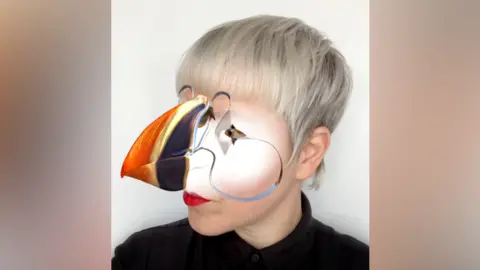
Lees points to the example of a false sighting of a red-winged blackbird in central Brazil, which is usually found in North America and had never been seen in this area of Brazil until the reported sighting. The bird was, in fact, an epaulet oriole – a common new world bird species – but the photographer had asked an AI platform to make the picture “look better”, which is when parts of the red-winged blackbird were added, resulting in the false sighting.